The Creative Media & Digital Culture Program specializes in research relating to digital media and serves as a nexus for interdisciplinary and transdisciplinary collaborations within the College of Arts and Sciences as well as beyond with The Edward R. Murrow College of Communication, the College of Business, and the School of Engineering and Computer Science. CMDC faculty are involved in creative practice, cutting edge research, innovative teaching, and community engagement—all aimed at solving problems, thinking critically about the relationship between technology and humanity, and contributing to the betterment of their community.
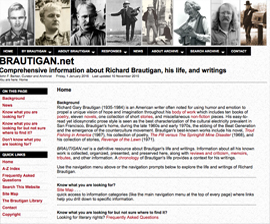
Current faculty research includes: Dene Grigar's "The Electronic Literature Showcase" for the Library of Congress, April 3-5, 2013, funded by a $5000 Meyer Award; John Barber's "Brautigan.net" , the internationally recognized online bibliography and archive for Washington-born author Richard Brautigan; Grigar and Brett Oppegaard's "A Villager's Tale" for funded by the National Endowment for the Humanities ($50,000), and "The Grand Emporium of the West" for EDSITEment!, funded by the National Endowment for the Humanities ($19,418); Will Luers' "Plotting the Database, a multimedia essay produced for the Scalar platform; Michael Rabby and Oppegaard's "The Old Apple Tree App," a comparative analysis focusing on user experience; Brenda Grell's 3D abstract animations and full dome design and development aimed for OMSI's Kendall Planetarium; Nicholas Schiller's article on Search Engine Optimization, knowledge, and information literacy; and Clare Wilkinson-Weber's book, Fashioning Bollywood: The Making and Meaning of Hindi Film Costume Berg, 2013
The entire faculty taught a one-week course in mobile app design and development at the 2012 Digital Humanities Summer Institute at U of Victoria. John Barber's sound art was featured in two international radio art broadcasts—Framework & RadiaLx. Both he and Will Luers exhibited work at the Electronic Literature Organization media art show. Dene Grigar curated the show. Brett Oppegaard & Grigar received a second grant from the National Endowment for the Humanities for a mobile app that will be part of the NEH's EDSITEment partnership with Verizon and the National Trust for the Humanities.
Will Luers gave his paper, "Reinventing the Authorial Voice in the Database Narrative," at the The Database | Narrative | Archive Symposium (in Montreal, May 12-15). This conference brought together theorists, scholars, artists, curators and programmers to reflect on recent developments in the theories and practices of new media production, described variously as database documentary, interactive narrative, and experimental archiving. He will also be helping to put together a Scalar peer-reviewed online journal for the symposium.
John Barber & Nicholas Schiller each have an essay published in this issue of Hyperrhiz. Both focus on the Brautigan Library, with Barber talking about the challenges of archiving digital work, and Schiller responding with a discussion about this new approach to the "library."
Ten CMDC undergraduates and one visiting post-doctoral scholar have been selected for the "Mobile Tech Research Initiative" (MTRI). These fellowships have been provided by Dick Hannah Dealerships. Participants include Hunter Crawford, Samantha Goelze, Natalya Gruntkovsky, Kerri Lingo, Anaya Martella, Chad McClure, Artem Popov, Michael Sasser, Kathleen Schultheis, Margarete Strawn, and Kathi Berens.
Will Luers has been invited to the "DNA Database Narrative Archive: An International Symposium on Nonlinear Digital Storytelling," taking place at Concordia University in Montreal Canada from May 13-15 2011. He will be talking about his most recent digital media work, The Father Divine Project. The conference generates from the Concordia Interactive Narrative Experimentation and Research Group (CINER-G) and focuses on "recent developments in the theories and practices of new media production, described variously as database documentary, interactive narrative, and experimental archiving."
Dene Grigar's essay about her Twitter-based fiction project, The 24-Hr. Elit Project, is now online in Judy Malloy's publication, Authoring Software.
John Barber's soundscape, "Analog Memories :: Digital Futures," was featured at "RadioFutura," a special broadcast event that took place at the Future Places: Digital Media and Local Culture in Porto, Portugal. An international conference addressing the potential and impact of digital media on local culture, "Future Places" is a collaboration between the Science and Technology Foundation of Portugal and the University of Texas at Austin with a focus on interdisciplinary research, education, and capacity building in advanced digital media.
Brett Oppegaard and Dene Grigar were awarded a 2011 Historical Promotion Grant amounting to $19,953 to create Phase II of the Fort Vancouver Mobile Project, multimedia content delivered via the two mobile apps for the iPhone and Android developed in Phase I of the project. Their research is aimed at informing and promoting discussion among Fort Vancouver visitors about the issues facing women of various ethnic groups at the site in the Victorian era and complements the work Oppegaard has already undertaken on Hawaiian workers at the Fort. The development of the Fort Vancouver Mobile app and the buzz around it has attracted attention from such prominent entities as the Corporation for Public Broadcasting, ARGFest (Alternate Reality Gaming Festival) and numerous scholars around the nation. This grant marks the 3rd awarded to the project. Students in Oppegaard's fall 2010 course (DTC 354 Digital Storytelling) helped to create content for Phase I, while those in Grigar's spring course will participate in creating content for Phase II. Documentation of Phase I, created by student Aaron May, can be seen here. This video was one of five student projects recently recognized with an "Honorable Mention" award at the 2010 International Digital Media & Art Association Student Showcase.
Grigar was one of six scholars invited to the University of Western Sydney to develop international standards for metatagging works of electronic literature across platforms and lay the groundwork for an online annotated directory of Australian new media writing. Her trip was funded by the Australian Research Council through a grant entitled "Creative Nation: Writers and Writing in the New Media Culture" awarded to "Writing and Society Research Group" members Anna Gibbs and Maria Angel. As Vice President of the Electronic Literature Organization (ELO) and Coordinator of its Consortium of Electronic Literature (CELL), Grigar helped to negotiate the agreements among the Scandavian-based research group "ELMCIP" (funded by the Humanities in the European Research Area (HERA) JRP for Creativity and Innovation), Likumed (Media Upheavals research center at the University of Siegen in Germany), the ELO, and scholars at UWS. The next meeting will take place in September in Istanbul, Turkey at ISEA International's conference.
John Barber has led the efforts to bring The Brautigan Library, a unique collection of nearly 400 unpublished manuscripts inspired by Washington-born author Richard Brautigan, to the Clark County Historical Museum and will work closely with the Museum to turn the collection into a permanent, interactive exhibit. Future plans call for digital submissions of manuscripts and a number of community outreach programs and activities. The relocation of The Brautigan Library to Vancouver results from a partnership between The Creative Media & Digital Culture (CMDC) Program and the Clark County Historical Museum. Both organizations have negotiated with the estate of the late author for nearly two years to finalize arrangements. The Brautigan Library was unveiled on October 7 at a special event that brought the late writer's daughter, Ianthe Brautigan, and the founder of the liberary, Todd Lockwood, to Vancouver.